Code Quality Workshop
Quality Sensors
for Agents
Feedback that arrives while the agent is still working.
Who am I?
Steven Diamante
- XP background
- Coaching software teams to be more reliable with AI
- Raleigh, NC, with my wife and two kids

What you can wire into the codebase you already have
Three sensors, each watching
something the others can’t see.
Fires after every edit. Long functions, deep nesting, duplication — caught in milliseconds.
Fires when the agent stops. Finds tests that pass but would never notice a bug.
Fires once a session. Finds misplaced responsibilities and names that lie.
The premise
I'm not a great developer. I'm a good developer with great habits.
Kent Beck
A habit is what you fall back on
while concentrating on something else. It fires without deciding to fire.
An agent cannot form one. Every session starts from nothing.
So the loop has to arrive from outside.
The consequence
So the loop has to
arrive from outside —
a sensor.
A fast, deterministic check that detects a problem, coaches a fix, and is triggered automatically.
Birgitta Böckeler · Maintainability sensors for coding agents

Martin Fowler · Design Stamina Hypothesis
Neglect the design, and every feature
costs more than the one before it.
Giles Edwards-Alexander · one file, in one working app
lines of Rust,
in a single file.
150,000 lines, written entirely by agents. He never reviewed the code.
martinfowler.com/articles/exploring-gen-ai/refactoring-economic-benefit.html
Same change, same codebase size
fewer input tokens.
48¢ → 8¢ on Sonnet 5.
80¢ → 14¢ on Opus 5.
Legacy code, organized. Not greenfield.
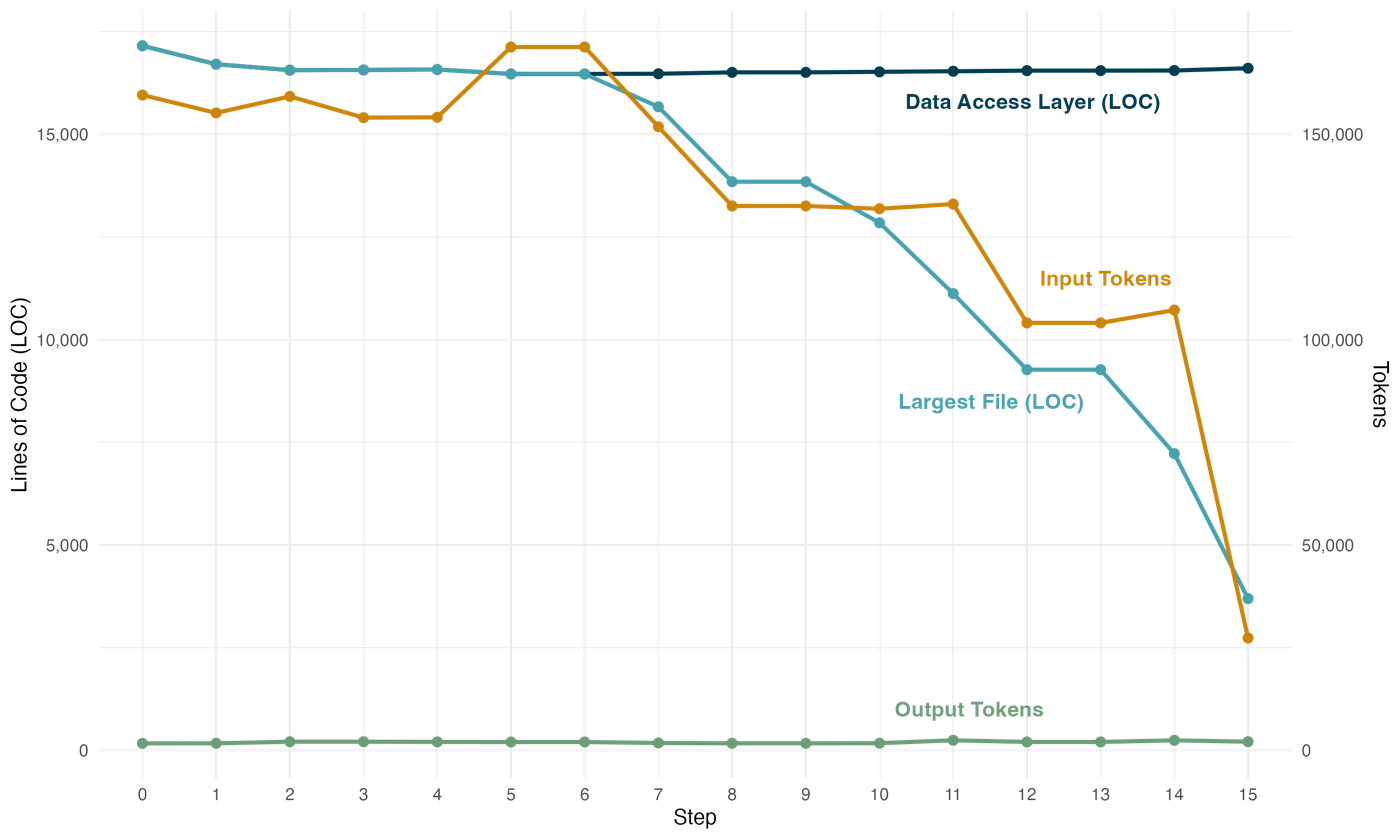
Giles Edwards-Alexander's fifteen refactoring steps.
Ivett Ördög · habit-hooks
Strict linting rules alone
don't lead to well
designed software.
The agent must understand the why behind the linting error.
// everything the agent was told:
"max-lines exceeded"

// what came back:
function buildLinesAndTotal(items) {
  ...
}

// the "and" is the confession
Liina Suoniemi · pre-registered, independently scored
On the stronger model, naming the metric
did worse than saying nothing.
Sonnet, complexity smell · 9 functions, 5 trials, 45 per condition · blind human check agreed on 81% of complexity cases — and every disagreement in the study was a complexity case where the human was stricter than the judge · github.com/LiinaSuoniemi/prompt-vs-metric-eval
Suoniemi · the same study
The stronger model
gamed it harder.
Same smell, same bare metric. Sonnet gamed it on 75.6% of trials. Haiku, 31.1%.
Naming the metric multiplied gaming on both models — 6.8× on Sonnet, 14× on Haiku.
Two models, so a signal, not a law.
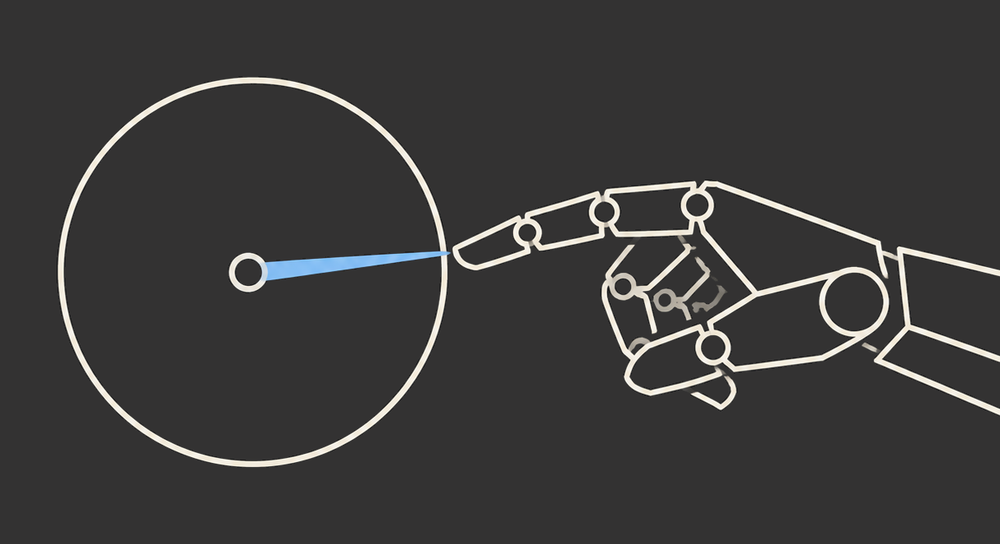
What the agent actually receives
Ship the reason
with the error.
complexity 11 (max 5)
src/domain/scoring.ts:42

WHY  Eleven branches is more than a
     reader holds at once, so the next
     change lands in the wrong one.

HOW  Name each decision. Pull each
     branch body into a function whose
     name says what it decides.

     Splitting it in half will not help.
How a sensor works
Anatomy of a sensor
By the end of this section, one is running unprompted against a real codebase.
Three parts
DETECT → COACH → TRIGGER
The thesis
The guide is not the loop.
The hook is the loop.
Trigger tiers · strongest first
No hooks in your agent? You still get two and three.
Before we go tier by tier
One feature, all the way through.
The same thing, actually running
A feature goes in. Every sensor fires.
Slice 2 · one feature, from its first test to every sensor green
Sensor 1 of 3
Structural
Length, depth, complexity, duplication. The cheapest sensor you will ever own.
The principle
Fix what's mechanical.
Coach what's judgment.
Prettier goes first and says nothing. Formatting is never a finding.
Attention spent on a semicolon is attention not spent on the design.
The rule set
Six numbers the agent
has to live inside.
A bar that fires the moment a function outgrows a single idea.
// eslint.config.mjs
'max-lines-per-function': 25
'max-lines':              150
'complexity':              5
'max-params':              4
'max-depth':               2
'max-statements':        15
On a codebase that predates you
Your four thousand violations
are not today's problem.
Count what is there today. That number is only allowed to go down.
Every tier reads the files this turn changed. Nothing else is asked to pass.
The file too bad to touch: name it, and say so out loud.
Duplication
The linter reads one file at a time.
jscpd reads all of them. Copy-paste across modules is a structural finding too — and one tool covers about 150 languages.
Structural · recorded
Watch eslint block
an edit, mid-turn.
Milliseconds, every edit. The guide comes attached.
Slice 0, unedited · the sensor fires, the hook blocks, the guide explains
Sensor 2 of 3
Behavioral
A passing test and a test that would notice are not the same thing.
Böckeler's own result
Coverage is the gameable one.
Statement coverage. Zero unit tests.
Same suite, different question
mutations no test noticed.
Break the code on purpose, run the suite, watch it stay green. Every mutant that survives is an assertion you never wrote.
Keeping it affordable
Mutate only what
this session touched.
A whole-repo run is a coffee break. The changed-file run finishes inside the turn.
Too slow for every keystroke. Fast enough to run before the agent is allowed to stop.
// the behavioral sensor
npx stryker run \
  --mutate "src/domain/quest.ts"

// seconds, not minutes
Behavioral · recorded
A mutant lives.
Then it doesn't.
Thirty seconds from a green suite to a suite that means something.
Slice 2 · four mutants live, the guide names the gap, the re-run kills every one
Sensor 3 of 3
Design
The part everybody assumes needs a human.
The assumption
Design is judgment.
So you reach for a model.
Cohesion, naming, responsibility — no linter has an opinion about any of it.
The reversal
Most of what we call design
is computable.
Not a heuristic. A rule that fails, in milliseconds, with a sentence attached.

The shape the rules protect
Every one of those boundaries
is a rule a linter can check.
terminal · browser · files
what the game asks of the world
rooms, movement, the bag
← dependencies point inward
Design, computed
Design rules the agent
cannot negotiate with.
Dependencies point inward. The domain never imports an adapter.
The domain must be deterministic. Take a Random port instead of Math.random().
Hand-rolled fakes only. Write a Fake in test/fakes/ instead of mocking.
The codebase you actually have
Freeze two boundaries
you still believe in.
The two you would defend in a code review.
// eslint.config.mjs
files: ['src/billing/**']

// no-restricted-imports
patterns: [{
  group:   ['**/checkout/**'],
  message: 'go through the contract'
}]

// then baseline what is already
// there. only new ones fail.
Where the effort goes
Invariants you can name in advance.
Whatever refuses to move — cohesion, semantic duplication, a name that lies — is what the model is for. Dollars, thirty seconds, once a session.
The charter
Twelve questions the design sensor is allowed to ask.
Placement
- Wrong layer or module?
- One module, two jobs?
Abstraction
- Duplication a matcher cannot see?
- Did one change ripple wider than it should?
Naming
- Does any name lie?
- Primitive obsession — a value object waiting?
Test design
- A specification, or a transcript?
- Test pain that is really design pain?
Comments
- Does a comment explain what instead of why?
Documentation
- A decision whose reason is not in the code?
- Has a document stopped being true?
- Does a document restate the code?
Without a charter, the design sensor becomes the slop it exists to prevent. Correctness, style, security and performance belong to somebody else.
The gate
Never buy model time while a linter is still talking.
// Stop hook
already reviewed?  exit  // once a session
no source changed? exit  // nothing to read
cheap sensor red?  exit  // it speaks first

otherwise          block
Design · recorded
The agent said done.
The hook sent it back.
The hook does not review. It refuses the stop until the agent has.
Slice 1, unedited · design DUE, the agent reviews, question 12 fails, the retry is clean
The layered loop
Trigger frequency matches sensor cost
Cheap sensors run constantly. Expensive ones wait their turn.
Where a sensor gets killed
An agent that cannot pass a sensor will try to remove it.
An inline eslint-disable. Inert: the finding comes back, plus a note that the directive did nothing.
Threshold raised, hook deleted — both are diffs. The gate re-runs the sensors, or proves the hook did.
A threshold raised on purpose, in a reviewed diff. That is a code review, not a tool.
The whole architecture, in one line
Instructions are a request.
Hooks are a wall.

Language coverage
TypeScript is the vehicle, not the point
| Tier | Pick yours |
|---|---|
| Structural | ESLint · PMD · Ruff · golangci-lint |
| Duplication | jscpd — one tool, most languages |
| Behavioral | Stryker · PIT · mutmut · cargo-mutants |
| Design, computational | dependency-cruiser · ArchUnit · import-linter · deptrac |
You do not port this by hand
Point your agent at your repo
and say: install the sensors.
Your language, your build tool, your existing lint, your agent runtime. It detects, then confirms.
It refuses to paste my thresholds. A number that fires a thousand times on day one is off by day two.
Writes a probe, watches the sensor fail, deletes the probe. A sensor nobody has watched fail is a guess.
A skill, for Claude Code and for Codex. It proposes the whole plan and stops for your approval before it writes a single file.
Upcoming Book · Packt
Software Craftsmanship for AI Coding Agents
Working title
- Hold the theory of the system in your own head
- Stay steerable: planning, TDD, merciless refactoring, small batches
- Manage the context window before quality degrades
- Verify: sensors, code review, UAT — never merge what you cannot trust
Take it with you
Clone the loop, not the game
github.com/SDiamante13/katacombs-kata-ts
sdiamante13.github.io/katacombs-kata-ts/references.html
Every source cited today, and what this talk takes from each.
Coming next
A hands-on workshop
- Guided exercises and deeper implementation examples
- Early-access offer for attendees
Watch for an email with dates and curriculum.